July 27, 2026 · asma
10 Best SERP Analysis Tools for SEO
Compare the best SERP analysis tools, including Semrush, Ahrefs, Moz, and Surfer SEO, to improve rankings, analyze competitors, and optimize SEO strategy.

Tool #1: Semrush — Best All-in-One SERP Analysis Tool
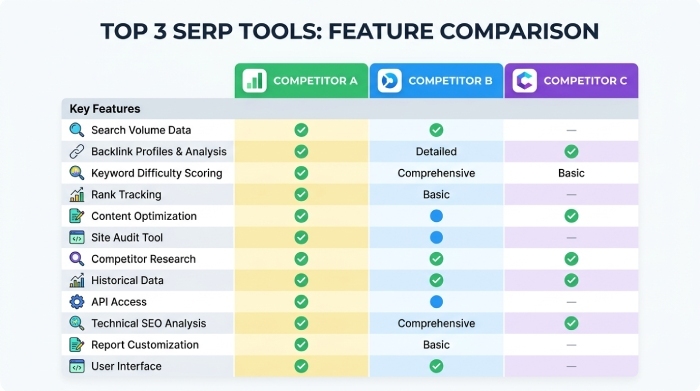
Semrush is one of the strongest platforms for end-to-end SERP analysis, especially for SEO professionals and digital marketing professionals managing multiple campaigns. Its SERP overview, keyword gap tools, keyword rank checker, position tracking, and competitor analysis features help you evaluate Google search results, organic results, ranking pages, and SERP features in one workflow.
The biggest advantage is context: you can connect keyword analysis, search volume, search intent, ranking difficulty, organic keywords, and organic search traffic in the same dashboard. Semrush also supports local SERPs, search results by location, geo-location targeting, and mobile vs desktop visibility, making it useful for local SEO and national campaigns. Its free SERP checker is a practical starting point for reviewing search engine results before investing in deeper SEO metrics.
When Semrush Fits Best
Semrush works especially well when you need one platform to move from keyword discovery to SERP analysis, competitor research, and performance tracking. It is a strong fit for agencies, enterprise SEO teams, and content marketers who want to understand not only which pages rank, but why those pages are winning across organic results, paid listings, featured snippets, and other SERP features.
Free SERP Review Workflow
A simple workflow is to start with the free SERP checker, review the current ranking pages, identify dominant SERP features, and then move into deeper keyword gap or position tracking reports. This helps prioritize keywords where the ranking difficulty, search intent, and competitive landscape align with your site’s authority and content resources.
Tool #2: Ahrefs — Best for Competitor SERP and Backlink Insights
Ahrefs is exceptional when SERP analysis needs to be paired with backlink metrics. The Ahrefs SERP Checker shows ranking pages, ranking difficulty, estimated traffic, domain rating, URL rating, backlinks count, referring domains, and unique referring domains for top Google search results.
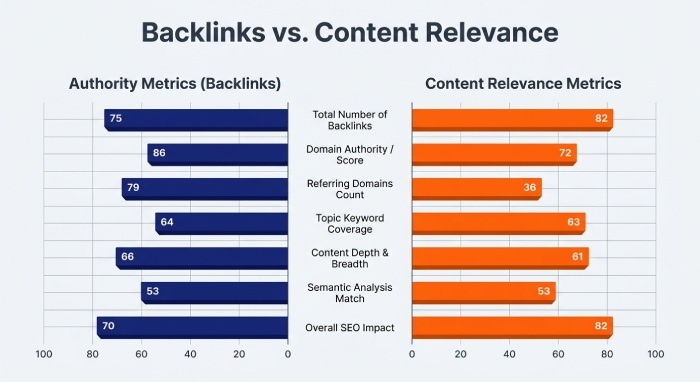
For deeper investigation, Ahrefs Site Explorer, Ahrefs Keywords Explorer, and the Ahrefs SEO Toolbar help you understand why specific ranking pages perform well. You can compare link popularity metrics, advanced SEO metrics, and SEO authority signals across competitors. This is especially useful when a page ranks because of high-quality backlinks rather than content relevance alone. For competitor analysis, Ahrefs remains one of the most reliable choices for connecting keyword analysis with backlink metrics and search traffic estimate data.
Backlink-Led SERP Evaluation in Ahrefs
When a SERP is dominated by established domains, Ahrefs helps separate content opportunities from authority-driven results. If ranking pages have large numbers of referring domains and strong URL-level authority, you may need a stronger link-building plan before targeting that keyword. If lower-authority pages rank well, the opportunity may depend more on search intent matching, content quality, internal linking, and topical coverage.
Tool #3: Moz Pro — Best for Keyword Difficulty and SERP Feature Tracking
Moz Pro is a strong option for teams that want clean SEO stats, keyword analysis, and ranking difficulty scores without overwhelming complexity. Moz is known for authority-based SEO metrics, and its SERP analysis workflow makes it easier to evaluate ranking pages, organic results, featured snippets, answer boxes, rich snippets, and other SERP features.
Moz is particularly helpful when assessing whether a keyword is realistically attainable. Its keyword difficulty and SERP features detection help identify whether Google search results are dominated by high-authority domains, fresh content, local SERPs, or rich results. While Ahrefs and Majestic may provide deeper backlink metrics, Moz Pro is a balanced search engine optimization platform for teams focused on search intent, keyword suggestions, and practical prioritization.
Tool #4: SE Ranking — Best Budget-Friendly SERP Analysis Tool
SE Ranking is a cost-effective choice for agencies and in-house teams that need SERP analysis, position tracking, rank tracking, and local SERPs without enterprise pricing. Its SERP tracking platform helps monitor search rankings across Google search results, desktop and mobile comparison, Google TLD variations, and search results by location.
The tool is useful for tracking ranking history, SERP position history, historical rankings, and competitor changes over time. You can evaluate ranking pages, keyword analysis data, backlink metrics, SEO stats, and search engine results across multiple markets. For businesses that need dependable SEO metrics on a budget, SE Ranking offers a strong mix of rank tracker functionality, keyword rank checker features, and SERP checker insights.
Tool #5: Surfer SEO — Best for Content Optimization Based on SERP Data
Surfer SEO is designed for content teams that want to turn SERP analysis into practical on-page recommendations. Instead of focusing only on backlink metrics, Surfer evaluates ranking pages in Google search results and compares content structure, topical coverage, headings, keyword usage, word count, and semantic relevance.
This makes it ideal when search intent is the main ranking challenge. If the top search engine results include detailed guides, comparison pages, product pages, or local SEO landing pages, Surfer helps identify the format Google appears to prefer. It is especially useful when paired with AI writing workflows involving OpenAI, Claude, or Gemini, because it gives editors a data-backed brief based on real ranking pages, SERP features, keyword analysis, and ranking difficulty.
Turning SERP Patterns Into Content Briefs
Surfer SEO is most useful when the goal is to translate SERP data into clear content instructions. Editorial teams can use its recommendations to decide which subtopics to cover, which headings to include, and how deeply to address user questions. Content services teams such as Blog Hands can also use this type of SERP-driven brief to align writers, editors, and SEO strategists around search intent before drafting begins.
Tool #6: SERPstat — Best for Keyword Clustering and SERP Competitor Research
SERPstat is a versatile platform for keyword analysis, competitor analysis, clustering, and SERP checker workflows. Its strength lies in grouping related keyword suggestions and showing which competitors repeatedly appear across similar search engine results. This helps identify topical competitors, not just domain-level competitors.
For example, SERPstat can reveal whether the same ranking pages dominate multiple organic keywords, whether featured snippets are common, and whether ranking difficulty is driven by content depth, SEO authority, or backlink metrics. It also supports local SERPs and search results worldwide, making it useful for international SEO projects. Consultants such as Aleyda Solis of Orainti often emphasize the importance of understanding market-specific search intent, and tools like SERPstat support that type of structured SERP analysis.
Tool #7: Mangools SERPChecker — Best for Simple SERP Snapshot Analysis
Mangools SERPChecker is one of the easiest tools for quick SERP analysis. The Mangools SERPChecker displays Google search results with key SEO stats such as domain rating-style authority indicators, link popularity metrics, backlink metrics, ranking difficulty, and SERP features.
Mangools is also connected to KWFinder, which is helpful for keyword analysis, search volume review, and keyword suggestions. The interface is simple enough for beginners but still valuable for SEO professionals who need fast insight into local SERPs, mobile vs desktop differences, and ranking pages. Reviews from publishers such as Nathaniell Brenes Owner, One More Cup of Coffee often highlight KWFinder’s usability, which is why Mangools remains popular among bloggers, affiliates, and smaller agencies.
Quick Checks for Bloggers and Affiliates
For bloggers and affiliate marketers, Mangools is helpful because it makes SERP analysis approachable without sacrificing essential SEO metrics. You can quickly review whether a keyword is filled with major publishers, niche websites, ecommerce pages, forums, or local results. That makes it easier to decide whether to create a review, comparison post, buying guide, informational article, or supporting content cluster.
Tool #8: AccuRanker — Best for Fast Rank Tracking and SERP Monitoring
AccuRanker is built for speed, accuracy, and large-scale rank tracking. Its rank tracker is especially useful for agencies that monitor thousands of keywords across local SERPs, desktop and mobile comparison, and search results by location.

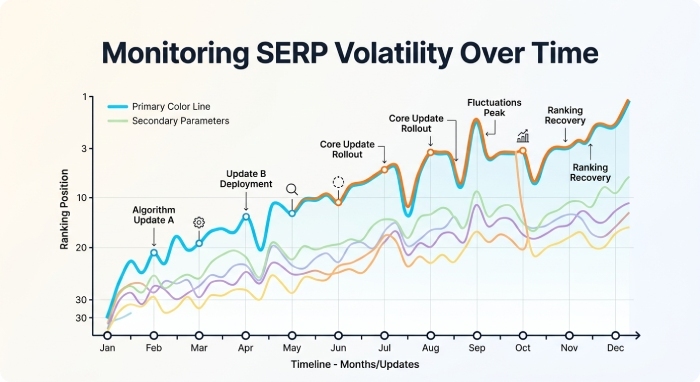
The platform offers strong position tracking, historical rankings, ranking history, SERP position history, and SERP features detection. You can segment Google search results by geo-location, Google TLD, device, landing page, and search engine. AccuRanker is less focused on deep backlink metrics than Ahrefs or Majestic, but it excels at showing how search rankings change over time. For ongoing SERP checker monitoring and executive-ready SEO stats, it is one of the fastest options available.
Monitoring SERP Volatility Over Time
AccuRanker is particularly valuable after publishing new content, updating existing pages, or launching a technical SEO improvement. By monitoring ranking history and SERP feature changes, teams can see whether visibility gains are stable or temporary. This makes it easier to report progress, diagnose ranking drops, and identify when competitors have refreshed content or gained new SERP features.
Tool #9: Similarweb — Best for Market-Level SERP and Traffic Analysis
Similarweb is best when SERP analysis needs to connect with broader market intelligence. Instead of only reviewing ranking pages or backlink metrics, Similarweb helps estimate search traffic, audience behavior, competitive visibility, and organic search traffic trends across industries.
This makes it valuable for competitor analysis at the market level. You can assess which domains gain traffic from organic results, which search engine results generate visibility, and how competitors perform across branded and non-branded organic keywords. Similarweb is often referenced alongside research from sites such as pcmag.com, homeworkingclub, authorityhacker, and other digital publishing brands because it helps connect SEO stats to business strategy. For enterprises, it adds a layer of search traffic estimate insight that traditional SERP checker tools may not provide.
Connecting SERP Visibility to Market Demand
Similarweb is useful when SEO decisions need to be tied to business growth, market share, and audience trends. Instead of looking only at a single keyword’s ranking difficulty, teams can evaluate how entire categories perform across search engines and competing domains. This can help prioritize content hubs, product categories, and SEO campaigns based on traffic potential rather than isolated keyword metrics.
Tool #10: SEO worx - Best Chrome Tool for inline SEO data in SERPs and Websites
SEO worx is useful for marketers who want inline SEO stats directly while browsing Google Search and websites. The Chrome extension for SEO helps streamline SERP analysis by surfacing page-level signals without forcing users to switch constantly between dashboards.
This type of workflow is ideal for fast keyword analysis, reviewing ranking pages, checking search engine results, and comparing local SERPs in real time. It pairs well with tools such as WhatsMySerp, WhatsMySerp SERP Checker, SpySERP, SpySERP SERP Checker, and search results simulation tools like the Mangools SERP simulator. For another lightweight SERP checker option, WhatsMySerp’s SERP check tool is helpful for quick Google search results validation. SEO worx is especially practical for fast audits, inline competitor analysis, backlink metrics review, and validating ranking difficulty assumptions while browsing live search engine results.
Inline SERP Review Workflow
SEO worx works best when you want to validate SEO assumptions directly in the browser. Instead of exporting SERP data into a separate dashboard, you can review ranking pages, compare on-page signals, inspect search results, and quickly evaluate whether competitors appear to be winning because of content depth, backlinks, topical relevance, or technical optimization. SEO practitioners such as Chris Hornak can use browser-based workflows like this to speed up preliminary SERP reviews before moving into deeper audits.
Practical Browser-Based Checks
A practical process is to search the target keyword, scan the top organic results, check page-level SEO stats, and note which SERP features appear above or around the traditional blue links. From there, you can decide whether the opportunity requires a new page, a content refresh, stronger internal links, more authoritative backlinks, or better alignment with search intent.