September 10, 2026 · asma
5 Best SEO Citation Strategies for Small Businesses
Discover 5 effective SEO citation strategies for small businesses, including NAP consistency, directory optimization, local citations, citation management, reviews, and business profile improvements to strengthen local search visibility and customer trust.

Local citations are one of the most practical search engine optimization assets a small business can build. When your business listings, directory listings, and business data are accurate across Google, Yelp, Facebook, Apple Maps, Bing, TripAdvisor, and other online directories, search crawlers receive stronger trust signals about who you are, where you operate, and how customers can reach you. For small businesses, local SEO depends heavily on NAP consistency, local relevance, business information accuracy, and an authoritative online presence.
A citation can be as simple as your Name Address Phone (NAP) appearing on a local business directory, review site, Chamber of Commerce page, government database, or industry-specific platform. For a broader primer, this overview of SEO citations explains why consistent business data supports search engine optimization and search engine rankings.
Strategy #1: Audit and Standardize Your NAP Information Across All Listings
Start With a Complete Citation Audit
A citation audit is the foundation of effective citation building. Before creating new local citations, document every place where your business name, address data, phone number, website, business category, business description, social links, and Geo-coordinates appear. This includes Google Business Profile, Google Maps, Yelp, Bing, Facebook, Apple Maps, YP.com, Foursquare, and major directories.
Check Your Name Address Phone (NAP)
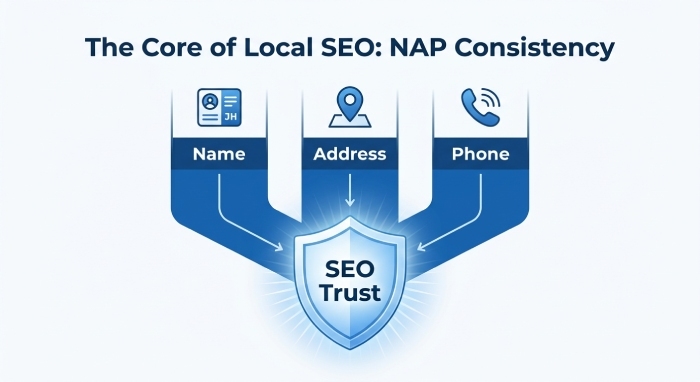
Your Name Address Phone (NAP) should be identical across all business listings. Even small differences—such as “Street” vs. “St.,” suite number omissions, or an outdated phone number—can weaken NAP consistency. Strong NAP consistency helps Google and other search crawlers validate your business data and improve local search visibility.
Use One Master NAP Record
Create a permanent SEO page or internal document containing your approved Name Address Phone (NAP), business category, business description, hours, service areas, and structured data. This master record becomes the source of truth for all directory listings and business listings.
Identify Inconsistent Business Data
Inconsistent business data can confuse search engines and customers. A manual citation audit helps you find duplicate listings, incorrect citations, old addresses, tracking phone numbers, or outdated business descriptions. Tools like Moz Local can also support automated citation checks; Moz’s guide to local citations is a useful reference for understanding how local citations influence local SEO.
Verify Address Data and Geo-Coordinates
Address data should match your storefront, office, or service-area setup. For brick-and-mortar businesses, Geo-coordinates matter because local map packs and the map pack rely on location accuracy. Google Maps, Apple Maps, and local business data platforms often use this information to determine local relevance.
Make NAP Consistency a Primary Driver
NAP consistency is a primary driver of customer trust and business verification. When local citations repeat the same Name Address Phone (NAP) across online directories, search engines gain confidence in your business information accuracy. This strengthens your online presence, supports local SEO, and can contribute to better search engine rankings.
Standardize Formatting Everywhere
Use the same business name, address data, and phone number format across Google Business Profile, Yelp, Facebook, Bing, TripAdvisor, Data Axle, Neustar Localeze, and Foursquare. This consistency reinforces trust signals and helps search crawlers connect your business listings to the same real-world entity.
Strategy #2: Claim and Optimize High-Authority Business Directories
Prioritize Major Directories First
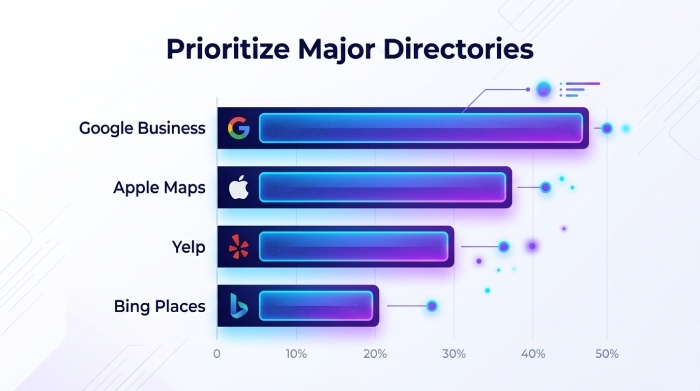
Start with major directories that influence local search results and customer acquisition. Google Business Profile should be your first priority, followed by Bing Places, Apple Maps, Yelp, Facebook, TripAdvisor, YP.com, and Foursquare. These business listings often appear prominently in search engine rankings and can drive online traffic directly.
Optimize Core Business Listings
Every major profile should include accurate business data, business category, business description, hours, services, photos, social links, and website URL. High-quality citations on major directories build digital authority and improve your online presence. For a helpful explanation of how citations fit into local search, see Mailchimp’s guide on what local search citations are.
Use Data Aggregators Strategically
Data aggregators distribute business data to networks of online directories, map platforms, GPS services, and review sites. Major Data Aggregators and local business data platforms include Data Axle, Neustar Localeze, Foursquare, Factual, InfoGroup, and Express Update. These sources can amplify local citations at scale.
Keep Aggregator Data Clean
If data aggregators distribute inaccurate business listings, errors can spread quickly. That is why NAP consistency and business information accuracy must come before mass submission. SearchAtlas provides a useful overview of SEO citation strategies that can help small businesses understand how citation building affects search engine optimization.
Strengthen Profiles With Structured Data
Structured data and schema.org integration help search crawlers understand your business entity. Add LocalBusiness schema through Schema.org where appropriate, including business name, address data, phone number, business category, opening hours, and Geo-coordinates.
Connect Website Signals to Directory Listings
Your website, directory listings, and local citations should reinforce one another. Consistent structured data, NAP consistency, backlinks from reputable directories, and complete business listings create stronger trust signals for local SEO and search engine rankings.
Strategy #3: Build Industry-Specific and Local Citations
Target Niche Citation Sources
Beyond major directories, small businesses should build local citations on industry-specific platforms. Attorneys can use Avvo, real estate professionals can use Realtor.com, healthcare providers can use WebMD, Zocdoc, healthcare registries, and professional associations, while hospitality businesses benefit from TripAdvisor.
Choose Platforms Customers Actually Use
Industry-specific platforms often have stronger conversion intent than general directory listings. A customer comparing doctors on Zocdoc or attorneys on Avvo is closer to customer acquisition than someone casually browsing online directories. These high-quality citations improve online visibility and build customer trust.
Add Local Community Citations
Local business directories, Chamber of Commerce pages, local newspapers, government databases, bloggers, sponsorship pages, and professional associations can create valuable local citations. These sources support local relevance because they connect your business to a specific city, neighborhood, or service area.
Balance Structured and Unstructured Citations
Structured local citations appear in formal business listings with fields for Name Address Phone (NAP), hours, and categories. Unstructured citations appear in articles, event pages, blog mentions, or news stories. Both citation types support local SEO, backlinks, digital authority, and search engine optimization. Search Engine Journal’s local SEO citation guide offers additional perspective on how these citation types influence local search rankings.
Build Citations Around Real-World Relationships
Sponsor a local event, join the Chamber of Commerce, contribute expertise to bloggers, or get listed by professional associations. These citations feel natural, improve your online presence, and can send qualified online traffic.
Strategy #4: Monitor, Update, and Remove Duplicate or Incorrect Citations
Schedule Regular Citation Maintenance
Local citations are not a one-time project. Businesses move, rebrand, change phone numbers, add departments, expand service areas, or adjust hours. Every change must be reflected across business listings, directory listings, data aggregators, review sites, and local business directories.
Run Manual and Automated Checks
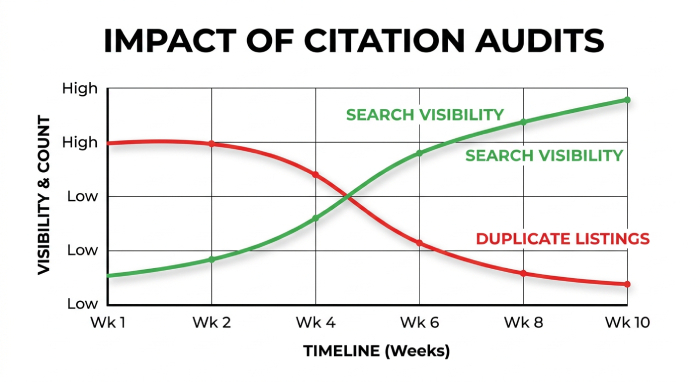
A manual citation audit helps catch subtle errors, while automated citation checks can quickly identify duplicate listings and incorrect citations. Use both methods to protect NAP consistency, local search visibility, and search engine rankings.
Remove Duplicate Listings
Duplicate business listings can split reviews, confuse customers, and weaken local SEO signals. If Google, Yelp, Bing, Facebook, or Apple Maps sees multiple records with different business data, search crawlers may struggle to identify the authoritative version.
Watch for Legacy Business Data
Old address data, outdated phone number records, former business names, and duplicate practitioner listings are common problems. N. Kleininger and other local SEO practitioners often emphasize that business information accuracy is critical because search engines use citations as confidence signals. BrightLocal’s list of top citation sites can help prioritize which online directories deserve ongoing monitoring.
Strategy #5: Use Reviews, Photos, and Business Details to Strengthen Citation Value
Enrich Every Listing With Trust Signals
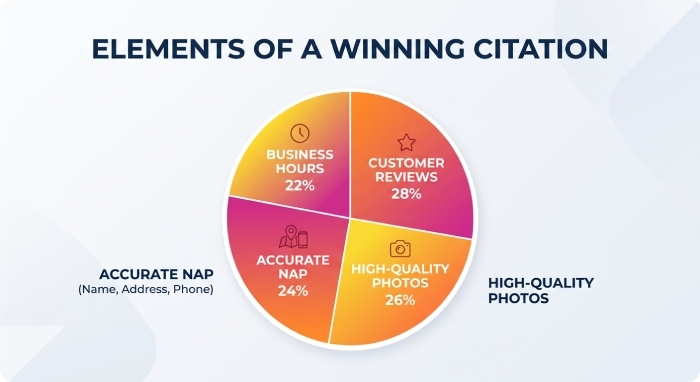
A basic citation includes Name Address Phone (NAP), but a stronger citation includes reviews, photos, services, products, business description, hours, attributes, payment options, and social links. Complete business listings improve online reputation, customer trust, and local search visibility.
Add Fresh Photos and Service Details
Photos of your storefront, staff, products, menu items, work examples, or facilities help customers validate your business. On Google Business Profile, Yelp, Facebook, TripAdvisor, and Apple Maps, rich media can influence engagement, online traffic, and customer acquisition.
Encourage Reviews Across Key Platforms
Reviews are not citations by themselves, but they increase citation value by adding trust signals and engagement signals. Positive reviews on Google, Yelp, Facebook, TripAdvisor, Avvo, Realtor.com, WebMD, or Zocdoc can support online reputation and improve click-through from local search results.
Match Review Strategy to Citation Strategy
If your target customers search heavily on Google Maps, prioritize Google Business Profile reviews. If your business depends on tourism, TripAdvisor may matter more. If your field is professional services, industry-specific platforms and professional associations can carry more authority. For additional tactical ideas, Linkflow’s resource on local SEO citations covers how local citations, business listings, and citation building can reinforce search engine optimization.
Turn Citations Into Conversion Assets
Local citations should do more than support search engine rankings. They should help customers choose you. Complete directory listings with accurate business data, NAP consistency, a compelling business description, relevant business category, updated photos, and strong reviews improve online presence and local SEO performance.
Use Expert Support When Needed
Small businesses with multiple locations, practitioner listings, or frequent business data changes may benefit from professional help. Agencies and platforms such as SeoWorx can support citation audit work, NAP consistency, business verification, local citations, and broader search engine optimization efforts that strengthen local search rankings.