July 29, 2026 · asma
Best SEO Software Tools to Boost Rankings, Traffic, and Online Visibility
Discover the best SEO software tools to boost rankings, increase traffic, and improve online visibility. Compare top SEO platforms and choose the right solution for your business.

Search engine optimization has evolved into one of the most effective digital marketing strategies for businesses that want sustainable online growth. Whether you're running a personal blog, an eCommerce store, a SaaS company, or a digital agency, improving your search visibility can lead to more qualified traffic, stronger brand recognition, and increased revenue.
Managing SEO manually, however, is time-consuming. From keyword research and technical audits to backlink monitoring and rank tracking, there are dozens of ongoing tasks that require specialized software.
SEO software simplifies these processes by providing data-driven insights, automation, and reporting that help businesses make smarter optimization decisions.
In this guide, we'll explore some of the best SEO software tools available today, explain what makes each one valuable, and help you choose the right solution based on your goals and budget.
What Is SEO Software?
SEO software is a collection of tools designed to help websites improve their visibility in search engines like Google and Bing. These platforms analyze websites, monitor rankings, identify technical issues, evaluate competitors, and recommend optimization opportunities.
Instead of relying on guesswork, SEO software provides measurable data that helps marketers prioritize improvements and track their progress over time.
Most modern SEO platforms combine several features into one dashboard, making it easier to manage campaigns efficiently.
Why SEO Software Matters
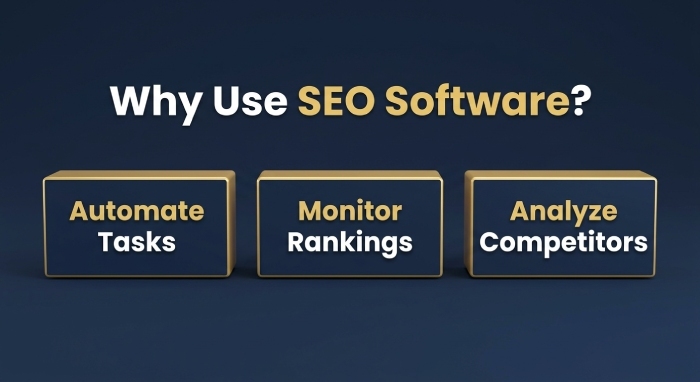
Using dedicated SEO software offers several advantages:
- Find profitable keyword opportunities
- Improve technical website health
- Monitor search rankings
- Discover backlink opportunities
- Analyze competitors
- Optimize content for search intent
- Generate SEO reports
- Save time through automation
- Measure campaign performance
Without the right tools, these tasks can become difficult, especially for websites with hundreds or thousands of pages.
Features to Look for in SEO Software
Before selecting an SEO platform, consider whether it offers:
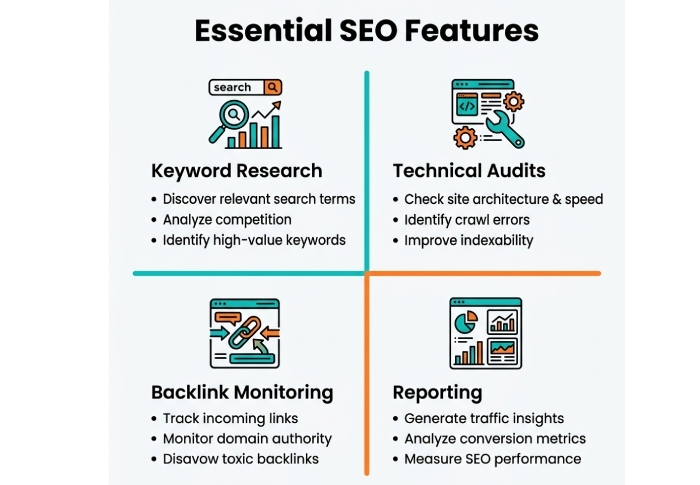
Keyword Research
A quality SEO tool should help identify high-volume, low-competition keywords relevant to your industry.
Competitor Analysis
Understanding what competitors rank for helps uncover new content opportunities and backlink prospects.
Technical Website Audits
Website crawlers should detect issues like:
- Broken links
- Missing metadata
- Duplicate content
- Redirect chains
- Slow-loading pages
- Crawl errors
Rank Tracking
Tracking keyword positions over time helps measure SEO success and identify ranking fluctuations.
Backlink Monitoring
Backlinks remain one of Google's strongest ranking signals. Good software should monitor new, lost, and toxic links.
Content Optimization
Some platforms recommend keyword placement, readability improvements, internal linking, and semantic keywords.
Reporting
Custom reports simplify communication with clients, managers, or stakeholders.
Best SEO Software Tools
1. SEOWorx
SEOWorx is an SEO platform built to help businesses improve their online visibility through practical optimization tools and performance insights. It combines multiple SEO functions into one platform, making it easier for website owners and marketers to monitor progress and identify areas for improvement.
Key Features
- Website SEO analysis
- Keyword performance tracking
- Technical SEO recommendations
- Competitor monitoring
- Backlink insights
- SEO reporting
- Performance monitoring
- User-friendly dashboard
Best For
- Small businesses
- Marketing agencies
- Local businesses
- Website owners
- SEO professionals
Advantages
- Easy to navigate
- Comprehensive reporting
- Actionable optimization recommendations
- Supports ongoing SEO campaigns
- Suitable for businesses of various sizes
2. Ahrefs
Ahrefs is widely recognized for its extensive backlink database and competitive analysis capabilities. It allows users to research keywords, monitor backlinks, analyze competitors, and discover content opportunities.
Key Features
- Keyword Explorer
- Site Explorer
- Rank Tracker
- Content Explorer
- Site Audit
- Backlink analysis
Best For
SEO professionals, agencies, and businesses focused on competitive research.
3. Semrush
Semrush offers an all-in-one marketing platform that extends beyond SEO into PPC, social media, content marketing, and competitive intelligence.
Key Features
- Keyword research
- Technical audits
- Position tracking
- Competitor analysis
- Content optimization
- Link building tools
Best For
Businesses seeking a comprehensive digital marketing solution.
4. Moz Pro
Moz Pro simplifies SEO with intuitive tools and educational resources, making it particularly appealing to beginners.
Features
- Keyword Explorer
- Site Crawl
- Rank Tracking
- Page Optimization
- Link Analysis
Best For
Small businesses and SEO beginners.

5. Google Search Console
Google Search Console provides direct insights from Google about how your website performs in search.
Features
- Search performance reports
- Index coverage
- Core Web Vitals
- URL inspection
- Sitemap submission
- Mobile usability
Best For
Every website owner.
6. Google Analytics
Google Analytics complements SEO efforts by tracking visitor behavior and conversions.
Features
- Traffic sources
- User engagement
- Landing pages
- Conversion tracking
- Audience insights
7. Screaming Frog SEO Spider
This desktop crawler is invaluable for identifying technical SEO issues across websites.
Features
- Crawl analysis
- Broken link detection
- Redirect analysis
- Duplicate content identification
- Metadata review
8. Mangools
Mangools offers an affordable suite of SEO tools suitable for beginners and freelancers.
Includes
- KWFinder
- SERPChecker
- SERPWatcher
- LinkMiner
- SiteProfiler
9. Ubersuggest
Ubersuggest provides keyword ideas, traffic estimates, backlink data, and content suggestions through a straightforward interface.
Best For
Budget-conscious marketers and small businesses.
10. SpyFu
SpyFu focuses on competitor intelligence, helping users understand organic and paid search strategies.
Features
- Competitor keywords
- PPC research
- SEO history
- Ranking reports
11. Surfer SEO
Surfer SEO emphasizes content optimization by comparing your pages against top-ranking competitors.
Features
- Content Editor
- SERP Analyzer
- Audit tools
- NLP keyword recommendations
12. Clearscope
Clearscope assists content teams in creating comprehensive, search-friendly articles.
Features
- Content grading
- Keyword recommendations
- Readability analysis
- Competitor comparisons
How to Choose the Right SEO Tool
The ideal SEO software depends on your objectives.
If you primarily need technical audits, prioritize tools with advanced crawling capabilities.
For content marketing, select platforms that provide keyword suggestions and content optimization recommendations.
Agencies often benefit from software with white-label reporting, multi-project management, and client collaboration features.
Businesses focused on competitor research should prioritize backlink databases and competitive intelligence.
Free vs. Paid SEO Software
Free SEO tools are useful for learning the basics and monitoring website health. However, they often have limitations on data access, reporting, and advanced features.
Paid platforms generally provide:
- Larger keyword databases
- Advanced competitor insights
- Historical ranking data
- Comprehensive backlink analysis
- Automated reporting
- Workflow automation
- Team collaboration features
Growing businesses usually find that paid tools deliver greater long-term value by saving time and improving decision-making.
Tips for Getting the Most from SEO Software
- Perform regular website audits.
- Monitor keyword rankings weekly.
- Review technical issues after website updates.
- Track competitor performance.
- Build high-quality backlinks consistently.
- Refresh outdated content.
- Optimize internal linking.
- Measure conversions, not just rankings.
- Combine multiple tools when necessary for a more complete SEO strategy.
Frequently Asked Questions
Can one SEO tool handle everything?
Many all-in-one platforms cover most SEO tasks, but some professionals combine multiple tools to gain deeper insights into technical SEO, backlinks, and content optimization.
Is free SEO software enough?
Free tools are excellent for getting started, but growing websites often benefit from paid platforms that provide more comprehensive data and automation.
How often should I audit my website?
A monthly technical audit is recommended, with additional checks after major website updates or migrations.
Why is keyword tracking important?
Monitoring rankings helps you evaluate the impact of your optimization efforts and identify opportunities for further improvement.
Can SEO software guarantee higher rankings?
No tool can guarantee top rankings. SEO software provides insights and recommendations, but success depends on implementing best practices, creating high-quality content, maintaining technical health, and earning authoritative backlinks.
Conclusion
SEO software has become an essential part of modern digital marketing. From keyword discovery and technical audits to backlink monitoring and competitor research, the right platform can streamline optimization efforts and support long-term search visibility.
For businesses looking for an integrated solution, SEOWorx offers a practical combination of website analysis, keyword tracking, technical SEO recommendations, backlink insights, and reporting tools to help improve online performance. Depending on your specific needs, you may also benefit from specialized platforms such as Ahrefs, Semrush, Screaming Frog, or Google Search Console.
Ultimately, the best SEO software is the one that aligns with your business goals, budget, and workflow. By using these tools consistently and acting on the insights they provide, you can build a stronger SEO strategy that drives sustainable organic growth over time.