September 3, 2026 · asma
Competitor Keyword Research: How to Find Keywords Your Rivals Rank For
Discover how competitor keyword research can uncover valuable SEO opportunities. Learn how to identify the keywords your rivals rank for, analyse keyword gaps and search intent, evaluate ranking difficulty, and turn competitive insights into a data-driven content strategy that improves organic visibility and rankings.

What Competitor Keyword Research Is and Why It Matters
Competitor keyword research is the process of discovering the search queries, organic keywords, paid search terms, and SERP opportunities that competitor websites already rank for. Instead of starting keyword research from a blank page, you use competitive analysis to see what is already working in Google Search, then decide where your SEO strategy can compete, differentiate, or outperform.
A strong competitor keyword analysis reveals which ranking positions your rivals hold, which pages attract organic traffic, and where content gaps exist between your site and theirs. This matters because every keyword gap is a potential entry point into your target audience’s buying journey.
Competitor keyword analysis connects SEO, PPC, and content
Competitor keyword analysis is not limited to organic keywords. It can also include PPC, Google Ads, paid search campaigns, PLA data, CPC estimates, and landing page patterns. Resources such as Search Engine Land’s PPC competitor analysis show how paid intelligence can complement SEO metrics and improve broader competitive analysis.
When you combine organic keywords with paid search insights, you can identify search queries that competitors consider valuable enough to bid on. Those terms often signal commercial intent, high conversion potential, or strategic content gaps worth addressing through content optimization, on-page SEO, or link building.

Why keyword gaps create ranking opportunities
A keyword gap shows where competitors rank but your domain does not, or where your ranking positions are much weaker. Keyword gap analysis helps reveal overlapping keywords, unique keywords, and hidden keyword opportunities that may not appear in basic seed keywords research.
For example, if three competitors rank on page one for “best CRM for small teams” and your site has no dedicated page, that is both a keyword gap and a content gap. If the SERP includes comparison tables, reviews, and SERP features such as People Also Ask, your SEO strategy should address content and search intent more thoroughly than existing pages.
How to Identify Your True Keyword Competitors
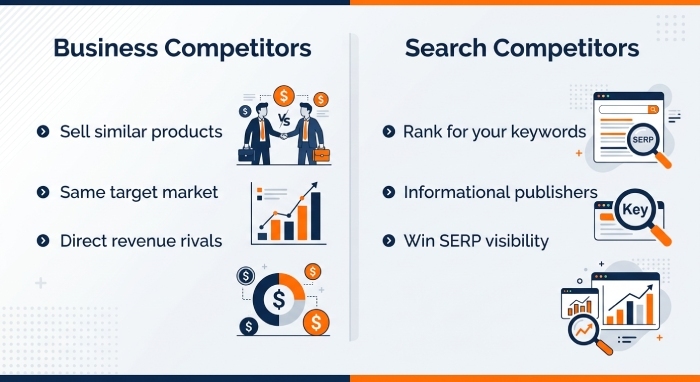
Your true keyword competitors are not always your direct business competitors. In SEO, competitors are the domains and URLs that consistently appear in the SERP for the search queries your target audience uses. This means publishers, marketplaces, SaaS review sites, local directories, and niche blogs can all be competitor websites.
Search competitors vs. business competitors
Business competitors sell similar products. Search competitors win visibility for the same organic keywords. Effective competitive analysis starts by separating the two.
Start with seed keywords and Google Search
Begin with seed keywords that describe your products, services, problems solved, and audience needs. Search those terms in Google Search and record the domains that appear repeatedly across the SERP. Pay close attention to ranking positions, SERP features, local SERP packs, and pages that earn estimated visits from informational and commercial search queries.
If you operate internationally, repeat the process across locations such as London, the United States, Deutschland, España, France, Italia, Nederland, Poland, Brasil, Sweden, Vietnam, Turkey, China, Japan, and Korea. Localized SERP behavior can expose regional content gaps and different ranking opportunities.
Validate with domain and URL analysis
After you identify competitors, run domain and URL analysis to understand which pages drive organic traffic. Compare competitors by topic clusters, backlink profile strength, site performance, and ranking performance. A competitor with fewer backlinks but better content optimization may signal that content quality and content and search intent alignment matter more than authority for that SERP.
This stage also helps distinguish broad authority sites from true niche rivals. If a competitor repeatedly ranks for your commercial search queries, appears in your keyword gap reports, and competes for similar organic keywords, it belongs in your competitive keyword research set.
Tools and Methods for Finding Rival Ranking Keywords
The right SEM tools speed up competitor keyword analysis by showing organic keywords, ranking positions, keyword difficulty, search volume, CPC, estimated visits, and traffic insights at scale. Tools do not replace judgment, but they make opportunity discovery faster and more evidence-based.
Use keyword gap and competitor discovery platforms
A keyword gap analysis tool helps you compare competitors side by side and find missing or weak keywords. The Semrush keyword gap analysis tool is commonly used to compare domains, uncover overlapping keywords, and prioritize a keyword gap based on intent and ranking positions. Semrush, operated by SEMrush Holdings, also connects keyword research with backlink profile data, App Center integrations, AI Visibility Index reporting, and content optimization tool workflows.
KWFinder and Mangools are useful for identifying keyword difficulty, search volume, and SERP competitiveness. The KWFinder by Mangools competitor keyword research workflow is especially helpful when you want simpler SERP analysis and quick keyword list creation. SERPWatcher can then support rank tracking when you need to track rankings over time.
Organic discovery with SEM tools
Use platforms such as SpyFu to track competitor keywords, inspect organic keywords, and compare competitors across SEO and PPC. Look for recurring pages with strong ranking positions, then export terms into save keyword lists for deeper review. Some SEM tools also include a bulk import feature, allowing you to upload competitor websites or URLs and analyze SERPs at scale.
A browser workflow can also help. For quick page-level checks, an SEO Chrome extension can support URL analysis, on-page SEO review, and SERP inspection while you browse competitor pages.
Paid search and PPC intelligence
PPC data can reveal commercial terms that competitors value. White Shark Media’s competitor keyword analysis guide explains how advertisers can evaluate Google Ads competition, paid search messages, and CPC signals. If a rival consistently bids on a term, that keyword may deserve SEO strategy attention as well.
Use Google Keyword Planner to validate search volume, CPC, and related search queries. You can also supplement your keyword research with WordStream’s keyword resource when expanding seed keywords into broader topic groups.
How to Analyze Keyword Gaps, Intent, and Ranking Difficulty
Finding keywords is only the first step. The value comes from interpreting each keyword gap through intent, SERP strength, keyword difficulty, and your ability to create a better page.
Prioritize by search intent and business value
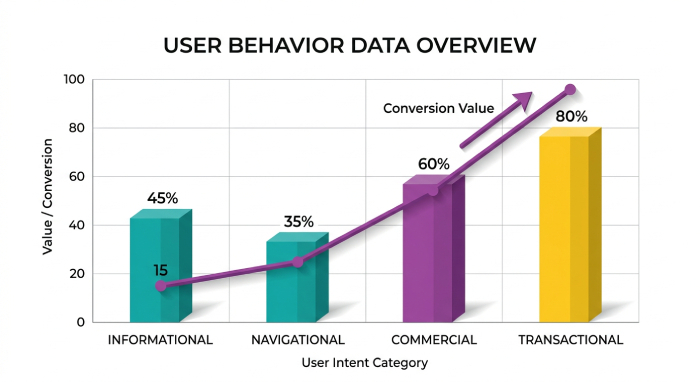
Group organic keywords by informational, navigational, commercial, and transactional intent. A keyword gap with high search volume but weak relevance may not be worth pursuing. Conversely, a lower-volume keyword gap with strong buying intent can deliver better organic traffic and conversion potential.
Match content and search intent
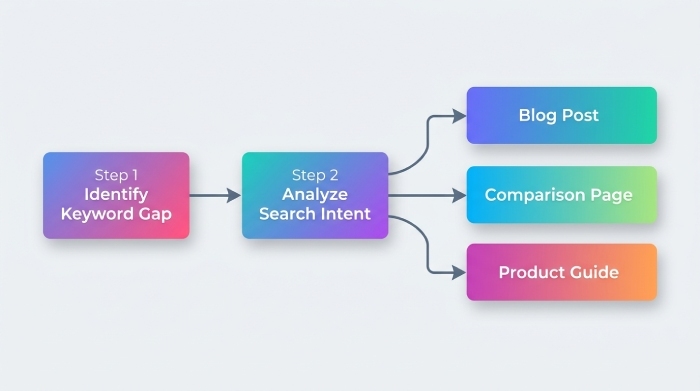
Analyze SERPs before creating content. If the SERP is dominated by buying guides, your product page may struggle. If it contains tutorials, templates, and comparison articles, your content strategy should match that format. Competitor keyword analysis should always ask: what type of content is Google rewarding for these search queries?
Review headings, structure, media, schema, internal links, and on-page SEO elements on top-ranking competitor pages. This helps expose content gaps you can fill with better examples, fresher data, stronger expertise, and clearer answers.
Balance keyword difficulty with authority
Keyword difficulty should be assessed alongside your backlink profile, topical authority, internal linking, and site performance. A difficult SERP may still be viable if your domain has strong topical relevance or if competitors have thin content. Likewise, a low-difficulty keyword can fail if the intent is mismatched.
Track ranking positions after publication and compare them against competitors. Rank tracking shows whether your content optimization is improving visibility, while ranking performance trends indicate whether additional link building, updates, or internal links are needed.
Turning Competitor Keyword Insights Into an SEO Content Plan
Competitor keyword analysis becomes valuable when it turns into a practical SEO strategy. The goal is not to copy competitor websites, but to build a content strategy that targets the right organic keywords, closes content gaps, and improves ranking positions over time.
Map keywords to content types
Turn each keyword gap into an action: create a new page, update an existing page, merge duplicate content, add FAQs, improve internal links, or build supporting articles. Use competitive analysis to decide whether a keyword needs a blog post, landing page, comparison page, category page, local marketing hub page, or product-led guide.
For example:
- High-intent commercial search queries may need comparison or alternative pages.
- Informational organic keywords may require tutorials, definitions, or step-by-step guides.
- Local SERP terms may need location-specific landing pages.
- SERP features may require structured answers, tables, images, or concise definitions.
Build, optimize, and measure continuously
Create a working keyword research dashboard that includes keyword gap priority, search volume, keyword difficulty, ranking positions, estimated visits, CPC, target URL, content status, and next action. This makes competitive analysis repeatable and keeps your SEO strategy focused on measurable ranking opportunities.
After publishing, track rankings in SERPWatcher or another rank tracking platform, monitor organic traffic, and revisit competitor keyword analysis monthly. New competitors, SERP changes, Google Ads activity, and AI-driven discovery tools such as the AI Visibility Index can all change where hidden keyword opportunities appear.
The strongest SEO teams treat competitor keyword research as an ongoing process: identify competitors, analyze SERPs, close content gaps, track competitor keywords, refine content optimization, and keep improving ranking performance across every important keyword gap.