August 28, 2026 · asma
How to Optimize Anchor Text for Better Search Rankings
Learn how to optimize anchor text for better search rankings with practical SEO strategies. Discover anchor text types, link equity, keyword variations, internal linking best practices, and ways to avoid over-optimization and link spam.

What Is Anchor Text? Definition, Purpose, and Common Examples
Anchor text definition
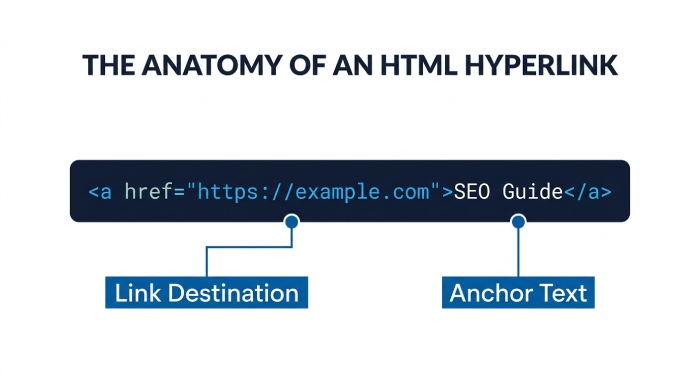
Anchor text is the clickable text in a hyperlink that users select to move from one page to another. In HTML, this link text sits between anchor tags, and it helps people and search engines understand the link destination. For a deeper primer, Yoast offers a useful explanation of what anchor text is and why it matters for SEO basics.
Good anchor text is descriptive, concise, and relevant. For example, if the hyperlink points to a blogging guide, clickable text like “read our blogging guide” is more helpful than “click here.” The surrounding text also matters because it gives context to the linked content, improving readability and user navigation.
Common anchor text examples
Common examples include keyword-rich link text such as “SEO copywriting guide,” branded links like “Yoast,” generic links like “learn more,” and a naked URL such as “hedghogs.com.” If an image is used as a hyperlink, the image’s alt text can function similarly to anchor text because it describes the link destination for search engines and assistive technologies.
How Anchor Text Works in HTML and Search Engines
The hyperlink signal
A hyperlink is both a navigation element and a relevance signal. The clickable text tells users what to expect, while search engines use anchor text, surrounding text, and page context to interpret relationships between pages. The general concept is well established in web terminology, as shown in this anchor text overview.
Why context changes meaning
The same keyword can mean different things depending on context. “Link Building” could point to a service page, a Yoast Academy lesson, or a Search Engine Journal article. Search engines evaluate the hyperlink, the linked content, the surrounding text, and the broader site structure before assigning relevance or ranking power.
Internal links
Internal links connect pages on the same website. They support user navigation, strengthen site structure, distribute link equity, and pass link juice to important pages.
External links
External links point to an external site. They can improve credibility when they reference relevant links, authoritative sources, and useful research, but they should not be used manipulatively.
Why Anchor Text Matters for SEO and User Experience
Relevance, readability, and navigation
Anchor text matters because it bridges SEO and user experience. Clear link text creates visual cues that help readers scan a page and decide where to go next. Moz’s guide to anchor text in SEO explains how descriptive anchor text can support relevance while helping search engines interpret relationships.
For users, the clickable text should match the promise of the link destination. For SEO, anchor text helps clarify the keyword theme of the linked content. If your focus keyphrase is “SEO copywriting course,” internal links using natural variations, synonyms, and partial phrases can reinforce relevance without harming readability.
Anchor Text and Link Equity: How Ranking Power Flows
Link equity, link juice, and internal linking
Every hyperlink can influence how link equity moves through a website. Many SEOs call this link juice, although “link equity” is the more professional term. Internal links help move ranking power from high-authority pages to deeper resources such as a permalink, product page, or long-form guide.
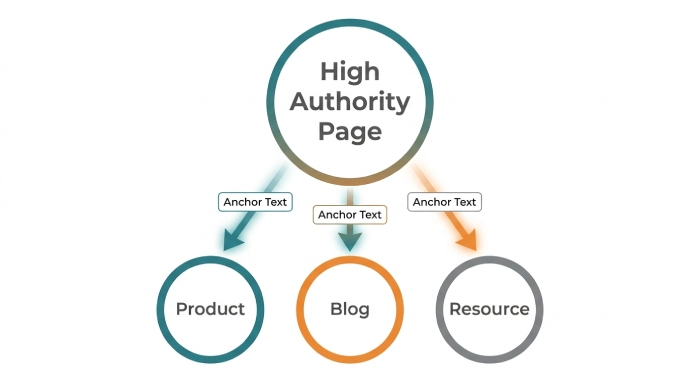
A strong internal linking strategy uses descriptive anchor text to help search engines and users discover important pages. Yoast SEO Premium, for example, includes the Yoast internal linking suggestions tool, which can surface related content while you write in WordPress. Yoast SEO for WordPress and Yoast SEO for Shopify can also support SEO analysis, meta description checks, and readability improvements.
Types of Anchor Text: Exact Match, Partial Match, Branded, Generic, and Naked URLs
Exact-match and partial-match anchor text
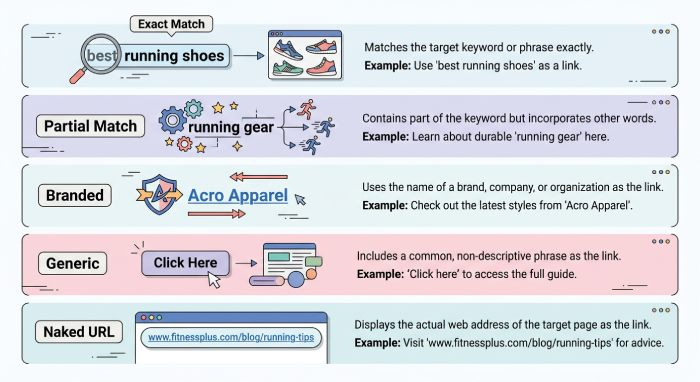
The main anchor text types include exact-match anchor text, partial-match anchor text, branded links, generic links, and naked URL anchors. Semrush provides a practical breakdown of anchor text types and how they appear in a link profile.
Exact-match anchor text uses the precise keyword you want a page to rank for, such as “keyword research tools.” Partial-match anchor text includes a keyword variation, such as “best tools for keyword research.” Exact-match anchor text can be useful, but too much of it may trigger over-optimization concerns.
Branded, generic, and naked URL anchors
Branded links use a brand name anchor, such as “Adanola,” “Yoast,” or “Moz.” Generic links use phrases like “this page,” “read more,” or “visit website.” A naked URL displays the raw address, such as “hedghogs.com.” Each type can be natural when used in the right context, but a healthy SEO strategy avoids relying on only one pattern.
Choosing Keywords, Synonyms, and Focus Keyphrases
Build variation into your anchor text
Anchor text optimization starts with keyword intent. Use a primary keyword when it genuinely fits, but also include a synonym, a partial keyphrase, a brand name anchor, or descriptive anchor text. This creates natural flow and reduces the risk of over-optimization.
For example, instead of linking every mention with “SEO copywriting course,” rotate variations such as “SEO copywriting guide,” “learn SEO copywriting,” “Yoast Academy training,” or “copywriting lessons.” This helps search engines understand topical relevance while keeping the link text useful for readers.
Best Practices for Optimizing Anchor Text Without Over-Optimization
Write descriptive anchor text for people first
The best linking best practices are simple: make the clickable text accurate, useful, and natural. Mediavine’s article on anchor text SEO best practices reinforces the value of clarity over repetition.
A good hyperlink should answer: “What will I find if I click?” Avoid vague link text when a descriptive phrase would improve user experience. Instead of “click here,” use “download the SEO analysis tool” or “review the internal linking suggestions.”
Balance internal links and external links
Internal links should guide users to relevant pages within your own site structure, while external links should support claims, cite sources, or add depth. Both internal links and external links can influence perceived authority, but they should serve the reader first. A page stuffed with keyword-heavy hyperlinks looks unnatural and can dilute link equity instead of improving link juice.
Avoiding Over-Optimization, Link Spam, and Penalties
Keep your link profile natural
Over-optimization happens when anchor text patterns look engineered rather than editorial. This became especially important after the Google Penguin algorithm update, which targeted manipulative link building and unnatural linking practices. Google’s documentation on Google’s Spam Policies explains how spam detection can apply to links that attempt to manipulate rankings.
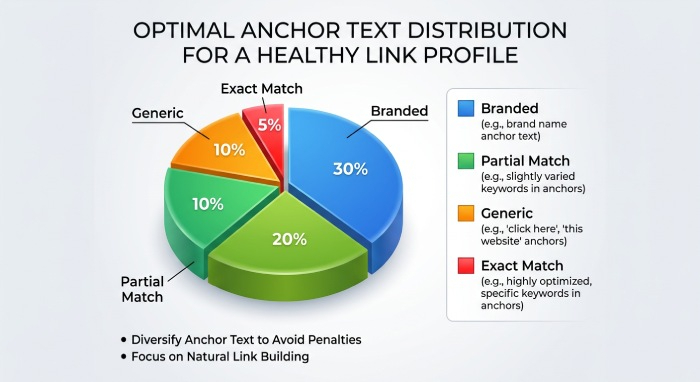
Avoid repeating the same exact-match anchor text across dozens of internal links and external links. A natural link profile includes branded links, descriptive anchor text, partial-match anchor text, naked URL mentions, and occasional generic links. This balance helps protect against penalties while maintaining link equity and link juice.
How to Audit and Improve Your Anchor Text Strategy for Better Search Rankings
Review your internal and external anchor text
An anchor text audit should examine internal links, external links, clickable text, link destination, surrounding text, and keyword usage. Search Engine Journal offers a useful guide on how to optimize anchor text for better SEO outcomes.
Start by exporting your links from tools such as Moz Link Explorer, Link Explorer, Domain Authority Checker platforms, Google Search Console, or a Chrome extension for SEO like Chrome extension for SEO. You can also use keyword research tools, an SEO analysis tool, and CMS plugins to evaluate internal linking opportunities.
Use SEO tools and editorial review
In WordPress, Yoast SEO and Yoast SEO Premium can help identify related content, readability issues, and internal linking suggestions. In Shopify, Yoast SEO for Shopify can support product-page SEO, meta description checks, and online presence improvements. For education, Yoast Academy, an SEO copywriting course, or an SEO copywriting guide can help teams apply consistent linking best practices.
Fix weak, repetitive, or misleading link text
Improve any hyperlink where the link text is vague, misleading, or overloaded with a keyword. Replace generic links with descriptive anchor text when clarity is needed. Reduce repeated exact-match anchor text. Add internal links from high-authority pages to important content where link equity and link juice should flow. Check that each link destination matches the promise of the clickable text, supports user navigation, and fits naturally into the surrounding text.