September 17, 2026 · asma
Page Authority Explained: Meaning, SEO Impact, and Best Practices
Page Authority measures the ranking potential of a specific URL. Learn what PA means, how Moz calculates it, how it differs from Domain Authority, and proven ways to improve it through backlinks, internal linking, content, and SEO best practices.
What Page Authority Means and How It’s Calculated
Page authority is an SEO metric that estimates the ranking potential of a specific URL in search engine results. Developed by Moz, Page Authority is commonly expressed as a PA score from 1 to 100, with higher scores suggesting stronger likelihood of performing well in the SERP. Moz explains its official methodology in its guide to Page Authority, where it positions PA as a predictive score rather than a direct Google ranking factor.
How Moz Calculates a PA Score
Moz uses a machine learning model trained against pages in its web index to estimate how likely a page is to rank. The model evaluates link data, backlinks, link counts, linking quality, and other signals associated with a URL’s link profile.
The Role of the Logarithmic Scale
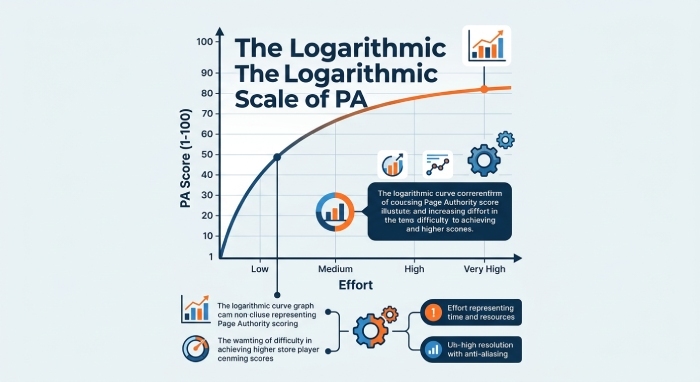
Page authority uses a logarithmic scale, meaning it is much easier to move a PA score from 15 to 25 than from 65 to 75. This matters because a page with a PA score of 70 usually needs substantially stronger high-quality backlinks, more authoritative linking domains, and a healthier link profile to keep improving.
Link Explorer, MozRank, and MozTrust Signals
Tools such as Moz Link Explorer, MozBar, the SEO Toolbar, and the Moz* *API help SEOs inspect a page’s backlinks, external links, followed links, nofollow links, link anchor text, and overall authority metrics. Historical concepts like MozRank and MozTrust helped shape how SEOs think about link quality, even though modern page authority relies on a more complex Link Data Set.
Important Note on Google
Google does not use Moz’s page authority or domain authority as official ranking signals. PA is a third-party comparative metric, not a confirmed Google ranking factor. Still, because it reflects link-based ranking strength, it can be useful for competitive research, SERP Analysis, and prioritizing SEO work.
Page Authority vs. Domain Authority: Key Differences
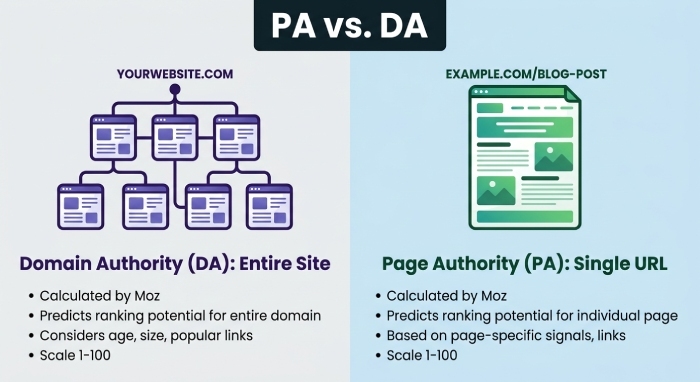
Page authority evaluates the strength of a single URL, while domain authority evaluates the predictive strength of an entire domain or website. Moz’s Domain Authority is also scored from 1 to 100 and is often used for broad site comparison, while PA is better for page-level decisions.
A helpful distinction is this: a homepage may have high domain authority, but a newly published blog post may still have a low PA score until it earns backlinks, internal links, and engagement. For broader comparisons, marketers sometimes use a website authority checker alongside Moz tools to compare authority metrics across platforms.
URL-Level vs. Site-Level Measurement
Page authority is URL-specific. It measures the ranking potential of one page in the SERP. Domain authority evaluates the overall strength of a domain, including its root domains, subdomains, Top Level Domains, and cumulative link profile.
Example: Strong Domain, Weak Page
A brand like Patagonia may have strong brand authority, brand credibility, and many Brand Mentions, but an individual product page still needs its own optimized content, internal links, and relevant backlinks to build page authority.
Example: Weaker Domain, Strong Page
A smaller publisher can outrank a larger site when one article earns excellent high-quality backlinks, appears on resource pages, gains mentions in Online Communities, and provides a better match for the target audience.
When to Use PA and DA Together
Use domain authority to assess overall website strength and page authority to evaluate individual URL competitiveness. In practical digital marketing, both SEO metrics help determine whether a page has enough ranking strength to compete for a specific keyword ranking opportunity.
Why Page Authority Matters for SEO Performance
Page authority matters because it helps marketers estimate how competitive a URL may be in search engine results. While it is not a Google ranking factor, a stronger PA score often correlates with better visibility because pages with strong link profiles tend to have more trust, referral equity, and discovery paths.
Agency reporting tools often define PA as a KPI for measuring URL-level SEO momentum, as seen in this page authority KPI explanation. Used correctly, page authority helps teams evaluate whether a page deserves more link building, content optimization, or internal promotion.
Page Authority and SERP Competition
A SERP is competitive when top-ranking pages have strong backlinks, established topical relevance, and high authority. Before targeting a keyword, review the SERP, compare competing PA scores, and check each page’s link profile in a link explorer.
Why PA Helps Prioritize SEO Work
If your page has a PA score of 18 and the top three results have PA scores above 55, ranking quickly may be difficult. That does not mean the keyword is impossible, but it does suggest you may need better content, stronger internal linking, and more authoritative backlinks.
Organic Traffic and Ranking Potential
Pages with stronger authority often capture more organic traffic, especially when their meta title, description, header tags, alt tags, and on-page relevance align with search intent. Page authority should be considered alongside content quality, technical SEO, and user experience.
Factors That Influence a Page’s Authority Score
The largest influence on page authority is the strength and quality of a URL’s link profile. Moz’s web index evaluates backlinks and related link signals, then uses its model to estimate ranking potential. For additional context, this Semrush article on page authority discusses how marketers interpret authority-like metrics in SEO workflows.
Backlinks and Linking Domains
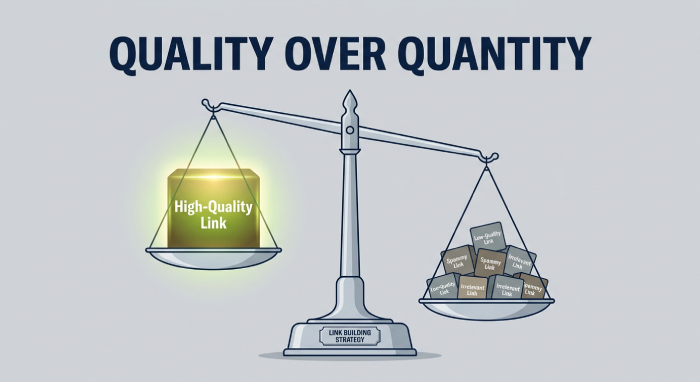
The number and quality of backlinks matter, but quality usually outweighs raw link counts. A page that earns editorial links from relevant root domains can build a stronger PA score than a page with many weak or unrelated links.
Followed Links vs. Nofollow Links
Followed links generally pass more link equity than nofollow links, but nofollow links can still drive referral traffic, awareness, and brand credibility. A natural link profile often includes both.
Link Anchor Text Relevance
Relevant link anchor text can help search engines understand context, but over-optimized anchors may appear manipulative. A healthy backlink profile includes branded anchors, partial-match anchors, natural phrases, and URL anchors.
Internal and External Link Signals
Strong internal linking helps distribute equity across important URLs. Meanwhile, high-quality external links from trusted pages can support page authority and improve the credibility of your content.
Technical Signals and Redirect Handling
Redirects can affect how link equity consolidates. A 301 redirect typically signals a permanent move, while a 302 status or 302 Status indicates a temporary redirect. When a valuable page moves, using a proper 301 Redirect can help preserve authority more effectively than leaving broken URLs unresolved.
Spam Score and Link Quality
Moz’s Spam Score helps identify potentially risky patterns in a site’s link profile. A high spam score does not automatically mean a penalty, but it should trigger deeper link research. Use Link Explorer, Moz Pro, or Digital Marketing Dashboards to identify questionable links, suspicious subdomains, and patterns that may weaken perceived authority.
Best Practices to Improve Page Authority
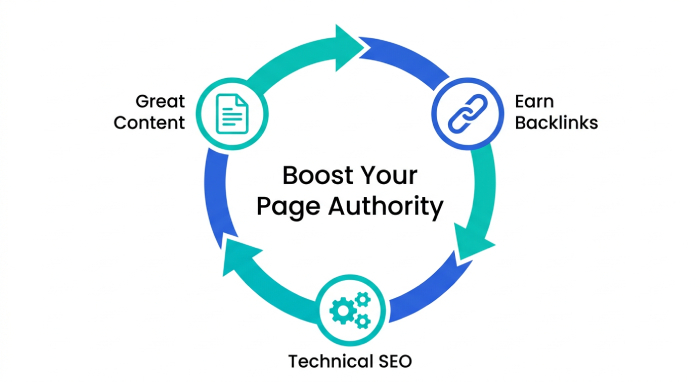
Improving page authority requires consistent work across content, links, and technical SEO. You can benchmark pages with tools such as a bulk Page Authority checker, then use findings to prioritize URLs with the best upside.
Create Link-Worthy Content
Publish assets that deserve links: original research, calculators, templates, expert guides, comparison studies, and data-backed resources. Strong content attracts backlinks naturally and improves ranking potential in the search engine results.
Align Content With Search Intent
Use Keyword Explorer, SERP Analysis, and competitor review to understand what users expect. Then optimize the meta title, description, header tags, images, alt tags, and body copy around the needs of the target audience.
Build Topical Depth
A thin article rarely earns authority. Add examples, expert commentary, FAQs, visuals, and supporting statistics. Better content optimization increases usefulness, and useful pages are more likely to earn high-quality backlinks.
Strengthen Internal Linking
Internal links help search engines discover important URLs and help users navigate related topics. Link from high-authority pages to strategic pages using descriptive anchor text. This supports crawlability, improves topic clustering, and can raise the PA score of important URLs over time.
Earn High-Quality Backlinks
A sustainable link-building strategy should prioritize relevance, authority, and genuine editorial value. Tactics such as guest blogging, expert quotes, digital PR, broken-link outreach, and inclusion on relevant industry resource pages can help strengthen a website’s backlink profile.
For teams learning how page authority fits into a broader SEO strategy, understanding how backlinks, content quality, and overall site performance influence a page’s authority can be valuable. SEO platforms such as SeoWorx can also help evaluate page authority alongside other SEO metrics when assessing link-building opportunities and competitor performance.
Use Link Explorer and Reporting Tools
Review every priority URL in a link explorer to monitor new backlinks, lost links, linking domains, anchor text, and changes in authority. Moz Pro Campaigns, Moz Community discussions, and Moz Pro campaigns can help teams track page authority, domain authority, Spam Score, and keyword movement in one workflow.
Compare Against Competitors
Do not evaluate PA in isolation. A PA score of 35 may be strong in a niche SERP but weak in a national finance SERP. Use competitive research, site comparison, and SERP Analysis to compare your URL against the actual pages ranking in Google.
Track Progress Over Time
Because the PA score is relative and based on a constantly changing web index, it can fluctuate. Monitor trends rather than obsessing over single-day changes. If your page earns relevant backlinks, improves its link profile, and gains stronger engagement, its page authority and ranking potential may improve gradually.